by Danielle Boyd | Mar 12, 2012 | News Slider
Neely Williams, an adjunct professor in the department of Communication and Journalism, is a long time community leader, educator, minister and activist for non-violence in youth engagement. Williams, who has been formally involved with the Nashville community for nearly 30 years, said her journey into community outreach began through participation in Vacation Bible School at a local church where four young men spoke about living with HIV/AIDS. As a part of the men’s presentation, “the Red Cross was there, inviting people from the community to get trained and be advocates and spokespersons about the disease,” Williams said. It was 1985, during the height of learning about HIV/AIDs. Williams stepped out into the inner city of the Nashville community to educate people on the disease. “I call this my formal step into the community because I have always been involved in nursing homes and wherever there was a need,” Williams said. Even at an early age, Williams had a heart for helping people and uniting cultures. “I like to say I built my first coalition on the Kindergarten playground,” she said, “because I am innately a person that says everybody should play and get an opportunity to have the ball. And I spent a lot of days trying to make sure those who were not chosen got a chance to play anyway.” Deciding to go back to school to obtain a degree at Vanderbilt University, Williams became trained as a chaplain, which furthered her community outreach with the Metropolitan Interdenominational Church. Since 1996, Williams has worked directly and indirectly with the outreach ministries of the Metropolitan Church in the north Nashville community....
by Danielle Boyd | Feb 18, 2012 | News Slider
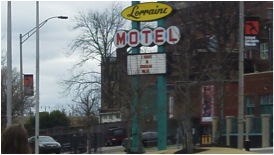
To take a deeper look into the history of the civil rights movement, a group of Lipscomb students traveled to the National Civil Rights Museum in Memphis, Tenn., at the Lorraine Motel where Dr. Martin Luther King Jr. was assassinated. The one-day trip was led by Dr. Lee Camp, a Bible professor, who sought to give students the opportunity to visit the history of the civil rights movement. Most students had never been to the museum, so it was “an eye-opening experience.” “It’s one thing to hear about it all the time, but to actually be in a place where history happened…it just made it so real for me,” said Natilan Crutcher, a Lipscomb student who went on the trip. The museum takes students through the history of African Americans from the early 1600s to the recent years of 2000-2012. The museum is made up of exhibits, artifacts, sculptures and remakes of events which led to the civil and human rights movement. “I came to this museum as a child, and I didn’t really know much about it,” said John Brownlee, a Lipscomb student from Memphis, Tenn., “but now that I am older I’m starting to appreciate it more, now that I understand the struggle of people like my grandmother and great grandmother.” For some students, the museum opened their eyes to appreciate life and the struggle of so many African Americans reaching for freedom, justice and equality. “I have a better understanding of how things went down,” said Lipscomb student Day Day Wells. Wells said the experience led her to think about the things people often take for granted such...
by Danielle Boyd | Feb 3, 2012 | News Slider
The Latino population in Nashville is growing, and Lipscomb is the first local university to reach out to Latino students by offering grants of up to $22,000 per student for those who meet the general admissions requirements. As President Randy Lowry sets new initiatives to increase growth in higher education among Latino students, the Latino community on campus is growing rapidly. In the hopes of increasing diversity and setting a new vision for campus, Lowry appointed Jessie Van de Griek, the director of the Hispanic Achievers program at the Harding Place Family YMCA, to continue bringing students to Lipscomb. “My role on campus is to be a bridge builder,” she said. As the associate dean of intercultural engagement, Van de Griek works with the Latino students on campus to help identify ways to connect the Latino community to Lipscomb. In addition to being a bridge builder, Van De Griek is a mentor to students, helping them understand the importance of higher education and professional development. For many Latino students on campus, Van de Griek played an important role in providing extra assistance in understanding the enrollment process. Jarathzy Lendos, a sophomore majoring in nursing, said, “I didn’t know a lot of the process that goes into applying…and I asked for their help, and they were more than willing to help me out.” Lack of knowledge on the process of attending college and low income are common obstacles of the Latino community, according to Van de Griek. As a result, most Latino students do not even consider attending college. With the help of Lipscomb and the Hispanic Achievers grant program, more...
by Danielle Boyd | Jan 20, 2012 | Uncategorized
Well known Christian author and speaker Donald Miller challenged his audience to contemplate this question when he spoke at Lipscomb Wednesday night: “Why do we not see Jesus?” Miller, who led a discussion entitled “Where in the world is Jesus?” in Collins Alumni Auditorium, travels around the world to speak at universities, sharing his faith through real life experiences. Answering his own question, Miller said, “The reason we don’t see Christ in the world is because we are not bringing Christ in the world.” Miller said the people of Christ must allow their faith to manifest itself in their daily activities. Miller, the author of Blue Like Jazz, which was a New York Times bestseller in 2002, and several other books, visited Lipscomb two years ago and jokingly said he wanted to pick up the discussion from where he left off previously. Miller challenged the audience with a deeper self-contemplation on the reasons “why we can’t recognize Jesus.” Miller said the first issue is that “God is not attractive (in an American culture).” He supported this idea with the Biblical text in Isaiah 53:2-3 (NIV). “He grew up like a tender shoot, and like a root out of dry ground. He had no beauty or majesty to attract us to him, nothing in his appearance that we should desire him. He was despised and rejected by mankind, a man of suffering, and familiar with pain. Like one from whom people hide their faces he was despised, and we held him in low esteem.” The second point Miller made is that “Jesus in not helping us to win validation in a...
by Danielle Boyd | Oct 16, 2011 | News Slider
Lee C. Camp, professor of theology and ethics, this week released his second book,Who Is my Enemy, guiding Christians through the misconceptions of the Islamic Faith and self-contemplating questions of war and peace in a Christian society. Camp’s interest in this issue was sparked several years ago after a Lipscomb seminar on the “theological rationale for peaceful coexistence with people of other faith.” “I did this lecture…and the next day it was on the front page of the Tennessean,” Camp said. According to Dr. Camp, the front page article misquoted and mischaracterized his statements, which led to his deepening interest in the issue of the Islamic faith. “It stirred up all sorts of deep anger and name calling,” Camp said. “By the end of the day, I had heard from people from California to Manhattan to Tel Aviv to New Zealand.” Camp’s misquoted information in the Tennessean also caught the media’s attention from all over the world, which stirred conversation and public interest. “I was intrigued with the anger and fear, especially towards Muslims that came out in that experience,” said Camp. As a result, he began to research, travel and learn more about the Islamic faith in order to compare the Christian and Islamic traditions in the realm of thinking about war and peacemaking. “The methodology behind this book is: seek first to understand and then to be understood,” Camp said. This concept is an old prayer tribute to Saint Francis, Camp said, that sets the undertone for the book as Christians began to contemplate on the idea of the Islamic faith. Instead of becoming defensive or fearful to the...
