by Emily Snell | Oct 1, 2012 | Uncategorized
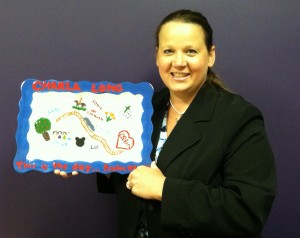
Roller coasters have been a part of Charla Long’s life for many years. Though no longer in the theme park industry, Long says her job as dean of the College of Professional Studies is “a roller coaster every single day.” Long, who previously worked with Silver Dollar City, Disney and Premier Park (which owns Six Flags), said the service mindset that was reinforced during her 10-year stint in the theme park business still influences the work she does. “I think that when you have a service mentality, that never leaves you whatever occupation you have,” she said. “I’m all about, ‘what’s in the best interest of students, how can I better serve my students, how can I show genuine hospitality?’ That’s something that I’ve certainly learned as a Christian. That’s a faith calling for me, but certainly I had that reinforced at Disney. Although they’re not a faith-based company, we had a lot of common tenets about how we treat people.” Long taught in the College of Business from 2002-2003 before moving to Wisconsin with her husband, Allen, who was working with OshKosh B’Gosh at the time. After 18 months teaching employment law at the University of Wisconsin, Long said she felt drawn to return to Lipscomb. “I really missed the opportunity to serve in a different way at Lipscomb,” Long said, “although I love a public education environment because I’m light there. Students don’t seek you out for light here like they do at a public institution. They were always in my office for personal problems because they had no one to talk to. Here we don’t get...
by Emily Snell | Jun 28, 2012 | Uncategorized
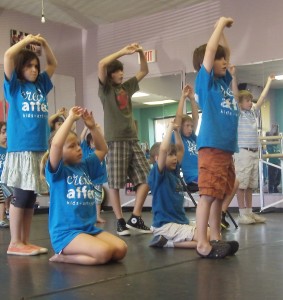
A homeless man sitting on a park bench. A single mom searching for work. Foster kids waiting for new homes. At a small dance studio in East Nashville, young children are rehearsing these scenes from a play, and in the process, nurturing their creative talents and learning about social justice. CreateAffect, a weeklong summer camp for children ages 5-11, educates kids about social justice issues like homelessness and modern-day slavery, while supporting the artistic community and teaching kids to express their creative side. CreateAffect Founder Abby Wahlers said she’s seen the kids come alive as they learn the positive impact they can have on the world. “A lot of kids came alive when they realized that what they were doing was making a difference,” she said. “They see that impact, and they flourish and come alive; and they want to do it more and more. Seeing that makes me come alive and makes me want to do more, and I love it. I love that cycle.” Wahlers, who has degrees in elementary education and human development from Wheelock College in Boston, said she thinks it’s important to teach children about social justice so that they more fully develop their innate empathy. “I think we’re all born with the capability to empathize,” she said. “We’re born with it, but I think along the way, we lose it. But these kids still have it. There are so many areas in their lives where they don’t get to choose, and they don’t get to be a force or to make a difference or to have an impact. When they’re able to reach...
by Clay Smith | Apr 4, 2012 | News Slider
Should it be a crime to be homeless? Many Lipscomb students think not, but a new state law makes it illegal to “sleep, cook or camp on state property.” More than a hundred Nashvillians attended the Rally for the Right to Exist in the Legislative Plaza on Sunday, arguing that the new law criminalizes both the homeless and Occupy Nashville protestors. At least 15 Lipscomb students camped out in the plaza overnight to protest the law. Gov. Bill Haslam signed House Bill 2638/ Senate Bill 2508 into law in March. Violators can face up to a year in jail or a fine of up to $2,500 or both. Proponents of the law say that camping in public places is damaging to public property and that the public’s camping increases health and sanitation problems. The Rally for the Right to Exist was created to address the repercussions the new law has for the homeless community. The Rally featured a potluck dinner, “teach-ins,” a documentary screening and culminated with an overnight “sleep-in” on the Legislative Plaza. Some policy makers in Nashville have said that the law was only intended to target Occupy Nashville Protestors, not the homeless. However, many Lipscomb students feel that the new law is detrimental because it “socially profiles” the homeless. “Certain things that are just a part of daily living can be criminalized for the homeless,” said Grant Winter, a senior American Studies major. “Sitting down on a sidewalk can be considered ‘obstructing a passageway.’ A homeless person who cuts through a private driveway might be charged with trespassing where someone who doesn’t ‘look homeless’ would never be...
by Leah Raich | Mar 11, 2011 | News Slider
Makeisha Seagraves says Lipscomb students have made a major difference in her life during her 10 years behind bars at the Tennessee Prison for Women (TPW). “The Lipscomb community has shown what true Christian love means,” Seagraves said. “They embraced me with open arms, never with a judging eye.” Seagraves is talking about what she has gained by studying alongside Lipscomb students who attend classes at the prison as a part of LIFE, Lipscomb Initiative for Education. The program gives students a chance to delve into both academics and service learning. Lipscomb history professor Richard Goode started this program with hopes that every student who attends Lipscomb would have the chance to take at least one class at the TPW at some point in his or her collegiate career. This spring semester, two classes are being offered: Society and the Law, as well as Disciplines of Christian Living. “This program and all involved have given me the strength to know that I am good enough to have a future,” says Tabitha, another inmate who believes her life was changed by LIFE. Ricki Adkins, a rising senior at Lipscomb University, spoke highly of the program. “As a student at Lipscomb, I am always looking for ways to better impact the surrounding community of Nashville,” Adkins said. “Prior to taking a class at the TPW this semester, I had no idea the place existed. Being a social work major, I have studied cases in which the U.S. criminal justice system often dehumanizes the incarcerated. “This experience has been life-changing, and I am so grateful to go to a school that provides...

by Allison Woods | Apr 23, 2010 | News Slider
Clinton Global Initiative University brings college students together to discuss the problems plaguing the modern world. This year’s conference was April 16-18 at the University of Miami. The closing panel of the conference addressed the continuing problems in Haiti. Michele Norris, of NPR’s All Things Considered, presided over discussion of the sensitive situation in Haiti after the earthquake. Three panelists were Haitian, including an author, a football player, and a student. Former President Bill Clinton joined them. He has played a major role in efforts to provide aid since the earthquake. Clinton was named special envoy to Haiti last year, and he and fellow former President George W. Bush are spearheading humanitarian relief efforts through the Clinton Bush Haiti Fund. Norris adopted the adage “grace in the rubble” as a theme for the panelists to discuss in relation to the ongoing efforts in Haiti. She focused on the positives coming out of such a crippling situation. Clinton said his ideas about revitalizing Third World countries now differ from those he had when he was president. He acknowledged he was wrong in his earlier assumptions that helping the Third World meant industrializing the countries. Now, he says, developing agriculture and helping a country become self-sufficient fixes the root of the problem. For example, Haiti imports one million eggs a day, a product that could easily be produced in-country. Clinton’s goal is to help Haiti focus on such self-support methods. Stanley Clermont, a Haitian student who experienced the earthquake, reluctantly shared his story from the day of the earthquake with the crowd of about 1,500. “It was the most terrifying day, but also the best day,” Clermont said. “This is that day that...
